If you’re thinking about tinting your car windows, one of the first questions that may come to mind is:
Can I tint my car windows myself?
The short answer is yes, it is possible to tint your own car windows using a DIY window tint kit. These kits are available online and in auto parts stores, and they can seem like an affordable way to upgrade your vehicle without paying for professional installation.
However, while DIY window tinting may look simple in videos, the real process is much more difficult than many drivers expect. Cutting film correctly, cleaning the glass perfectly, avoiding bubbles, preventing dust contamination, and applying the film smoothly all require patience, skill, and the right environment.
For drivers in California and the Bay Area, where strong sun, daily commuting, and legal tint requirements matter, choosing between DIY tint and professional window tinting is about more than just saving money. It’s about appearance, durability, visibility, comfort, and long-term value.
This guide explains the pros and cons of DIY window tint, common mistakes people make, when it may be worth trying, and why many drivers eventually choose professional installation.
Yes, you can tint your car windows yourself. DIY tint kits usually come with pre-cut or roll-based window film that you apply to the inside of your vehicle’s glass.
Some kits are designed for universal use, while others are pre-cut for specific vehicle makes and models. Pre-cut kits are usually easier because they reduce the need for trimming, but even then, installation still requires careful preparation and technique.
The basic DIY process usually includes cleaning the glass, wetting the window, positioning the film, removing air and water with a squeegee, trimming edges, and allowing the tint to cure.
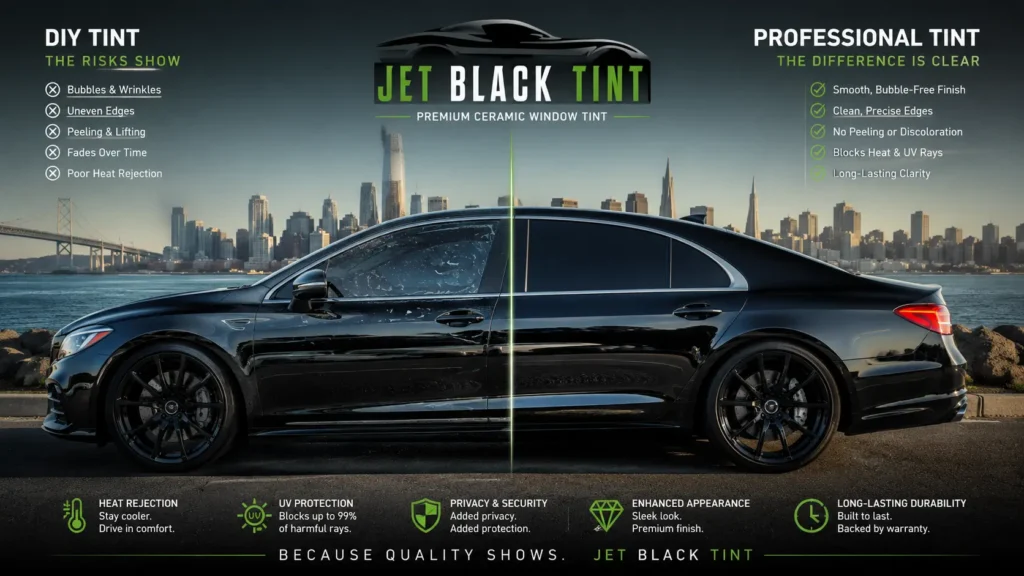
On paper, this sounds simple. In real life, small mistakes can quickly lead to bubbles, wrinkles, peeling edges, trapped dust, or uneven cuts.
The biggest reason drivers consider DIY window tint is cost. A tint kit is usually cheaper upfront than paying for professional installation.
DIY tint may appeal to people who:
For some hobbyists, DIY can be a fun project. But for most everyday drivers, the finished result often doesn’t match the clean look of a professional tint job.
DIY tinting requires more than just the film itself. To get even close to a professional result, you need the right tools and a clean workspace.
Common tools include:
The environment matters a lot. Dust, wind, pet hair, and outdoor debris can easily get trapped under the film. That is one reason DIY tinting outside or in a driveway often leads to poor results.
Professional tint shops are set up to reduce contamination and improve installation quality.
DIY tint jobs often fail because of small mistakes that are difficult to avoid without experience.
Even tiny dust particles can create visible imperfections. Once contamination is trapped under the tint, it usually cannot be removed without lifting or replacing the film.
Bubbles are one of the most common DIY problems. They can happen because of poor squeegee technique, trapped moisture, contamination, or uneven film placement.
Window tint film is delicate. Once it wrinkles or creases, the damage is usually permanent.
Cutting film too short can leave gaps. Cutting too close can cause lifting or rough edges. Clean trimming takes practice.
If the edges are not properly installed, the film may begin peeling within weeks or months.
Choosing the wrong shade can create visibility issues or legal problems, especially in California.
Before choosing any tint percentage, review California tint guidelines here:
https://jetblacktint.com/legal-tint
The biggest difference between DIY and professional tinting is consistency.
A professional installer has the experience, tools, environment, and materials needed to produce a clean finish. They also understand how to work with curved glass, tight edges, rear windows, defroster lines, and complex vehicle shapes.
DIY tint may save money upfront, but the final result often depends heavily on the installer’s skill.
Professional tinting usually provides:
DIY tint may provide:
For most vehicles, especially newer or higher-value cars, professional installation is usually the safer choice.
Usually, no.
DIY window tint often does not last as long as professionally installed tint. This is not always because the driver did something wrong. It is often because many DIY kits use lower-quality film and are installed in less controlled conditions.
Common DIY lifespan issues include:
Professional ceramic tint can last significantly longer when installed correctly.
If you are looking for a higher-performance tint option, Jet Black Tint offers premium packages here:
https://jetblacktint.com/199-window-tinting-special-offer/
DIY tint is cheaper upfront, but it is not always cheaper long term.
A DIY kit may cost less initially, but if the result is poor, you may end up paying for:
This is where the “cheap” option can become more expensive.
If your DIY tint fails or your current tint is bubbling, peeling, or damaged, professional removal is often needed before new film can be installed.
Jet Black Tint offers tint removal here:
https://jetblacktint.com/free-full-tint-removal/
Starting with clean glass makes a major difference in the final result.
DIY tint usually will not damage the glass itself, but mistakes can create problems.
The biggest risks include:
Rear windows are especially tricky because of defroster lines. Scraping or pulling film incorrectly can damage them.
That’s one reason old tint removal is often better handled professionally.
DIY tint is not automatically illegal. What matters is whether the final installation complies with California tint laws.
The issue is that many DIY kits are sold without enough guidance about local regulations.
California has specific rules for different windows, especially front-side windows. Installing a tint that is too dark can lead to citations, fix-it tickets, or required removal.
Before installing any tint yourself, check legal requirements:
https://jetblacktint.com/legal-tint
A professional shop can help guide you toward a tint setup that balances appearance, privacy, heat rejection, and compliance.
Professional tinting looks better because installers know how to handle film properly.
They understand how to:
The result is a smoother, more seamless appearance.
This matters because window tint is highly visible. A poor tint job can make even a nice vehicle look neglected.
Not all tint film is the same.
Many lower-cost DIY kits use basic dyed film. Dyed tint can improve appearance, but it usually offers weaker heat rejection and a shorter lifespan.
Higher-quality films, especially ceramic tint, provide better:
For California and Bay Area drivers, this matters because strong sunlight can quickly expose the difference between cheap film and quality film.
Some people consider DIY tint because they don’t want to spend time at a shop.
That’s understandable.
But mobile tinting gives customers a more convenient option without sacrificing professional quality.
Jet Black Tint offers mobile tint installation here:
https://jetblacktint.com/mobile-tint/
Mobile tinting can be done at your:
This is especially useful for busy Bay Area drivers who want professional results without rearranging their entire day.
Professional tinting does not always have to be expensive.
Jet Black Tint offers affordable packages for customers who want a clean professional result without overspending.
You can view the $99 tint offer here:
https://jetblacktint.com/99-window-tinting/
This is a strong option for drivers who want:
For many customers, an affordable professional tint package makes more sense than risking a poor DIY result.
DIY tint may be reasonable if you are working on an older vehicle, experimenting, or applying tint to a small flat window.
It may also make sense if you are comfortable with detailed hands-on work and accept that the final result may not be perfect.
DIY is less ideal if:
In those cases, professional installation is usually the better choice.
Yes, you can tint your car windows yourself.
But the better question is:
Should you?
If you want the lowest upfront cost and don’t mind the learning curve, DIY tint may be worth trying. But if you want clean results, better durability, stronger heat rejection, and fewer headaches, professional window tinting is usually the smarter investment.
For California and Bay Area drivers, professional tint offers a better balance of appearance, comfort, legality, and long-term value.
Yes, DIY tinting is possible, but it requires patience, proper tools, and a clean environment.
Yes, it can be difficult for beginners. Bubbles, wrinkles, and uneven edges are common problems.
DIY tint is cheaper upfront, but mistakes can lead to removal and reinstallation costs.
Usually not as long as professional tint, especially if low-quality film is used.
Yes. Bubbles are one of the most common DIY tint issues.
Yes, but professional removal is recommended if adhesive residue or rear defroster lines are involved.
https://jetblacktint.com/free-full-tint-removal/
For most drivers, yes. Professional tint usually looks better, lasts longer, and performs better.
Yes.