When choosing window tint for your vehicle, one of the most common questions drivers ask is: Should I choose ceramic or dyed window tint?
At first glance, both options may seem similar. They both darken your windows, improve privacy, and enhance the appearance of your car. But once you look deeper, the differences become significant—especially when it comes to heat rejection, UV protection, durability, and long-term value.
If you’re trying to decide between ceramic vs dyed window tint, this guide will help you understand the pros, cons, costs, and which option makes the most sense for your vehicle and driving habits.
Whether you’re looking for an affordable tint upgrade or a premium heat-blocking solution, making the right choice now can save you money and frustration later.
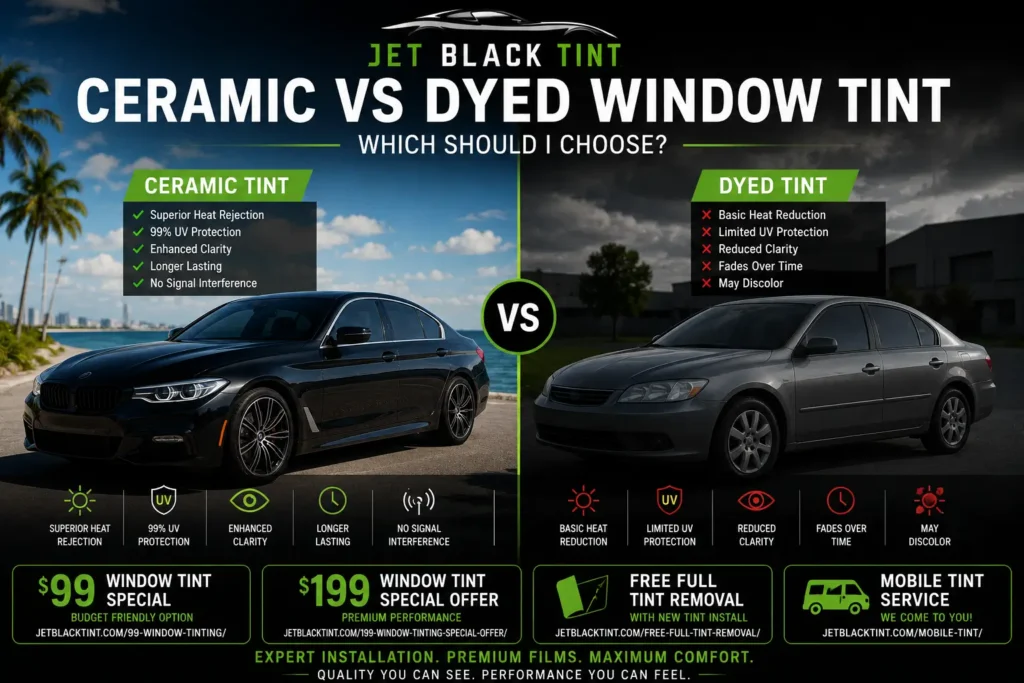
Dyed window tint is one of the most common and budget-friendly types of automotive tint available. It works by applying a dyed layer between adhesive and protective layers, giving your windows a darker appearance while reducing glare.
For many drivers, dyed tint is the entry point into window tinting because of its affordability.
Benefits of dyed tint include:
However, dyed tint has limitations. It primarily improves appearance rather than performance. While it does provide some heat reduction, it doesn’t block heat nearly as effectively as premium alternatives.
Over time, dyed tint can also fade, discolor, or turn purple—especially when exposed to intense sunlight.
This makes dyed tint more suitable for drivers looking for a basic cosmetic upgrade rather than maximum performance.
Ceramic window tint is considered one of the most advanced tint technologies available today.
Unlike dyed tint, ceramic film uses non-metallic ceramic particles engineered to block heat, infrared radiation, and harmful UV rays without interfering with visibility or electronics.
This makes ceramic tint ideal for drivers who care about comfort, long-term durability, and performance.
Ceramic tint offers:
Ceramic tint is especially popular in hotter climates where keeping the interior cooler makes a noticeable difference.
One of the biggest differences between ceramic and dyed tint is heat performance.
Dyed tint helps reduce glare and provides some shading, but it does little to block infrared heat—the heat that makes your car feel unbearably hot.
Ceramic tint, on the other hand, is specifically designed for heat rejection.
If your vehicle spends time parked in direct sunlight or you drive frequently in warm weather, ceramic tint delivers dramatically better comfort.
Winner: Ceramic Tint
UV exposure doesn’t just affect your skin—it damages dashboards, leather seats, and interior trim over time.
Dyed tint offers limited UV blocking.
Ceramic tint blocks significantly more harmful UV radiation, helping protect both passengers and your vehicle’s interior.
Winner: Ceramic Tint
Many people choose tint because it makes a vehicle look cleaner, sleeker, and more premium.
Dyed tint creates a dark, attractive look initially, but can fade over time.
Ceramic tint maintains its appearance much longer while offering better optical clarity.
Winner: Ceramic Tint
This is where dyed tint wins.
Dyed tint costs significantly less upfront, making it attractive for budget-conscious drivers.
If affordability is your top priority, Jet Black Tint offers an affordable entry option with the $99 Window Tint Special:
👉 https://jetblacktint.com/99-window-tinting/
For drivers wanting a stronger performance upgrade without jumping to premium pricing, the $199 Window Tint Special Offer may be the sweet spot:
👉 https://jetblacktint.com/199-window-tinting-special-offer/
Winner: Dyed Tint (short-term budget)
Durability is where cheaper tint often becomes expensive.
Dyed tint can fade, peel, bubble, or discolor over time.
Ceramic tint is built to last significantly longer and maintain consistent performance.
This means fewer replacements, less maintenance, and better long-term value.
Winner: Ceramic Tint
Some tint films containing metal can interfere with:
Ceramic tint contains no metal and causes no signal interference.
Dyed tint also generally avoids this issue.
Winner: Tie
If you live in a sunny region, this decision becomes easier.
Hot climates place constant stress on your car’s interior and cooling system.
Ceramic tint helps:
Dyed tint helps visually but cannot compete in heat reduction.
If heat is a serious concern, ceramic is the clear winner.
This is one of the most searched questions—and the honest answer is yes, for many drivers.
Ceramic costs more upfront, but the performance difference is substantial.
Instead of thinking only about installation price, think about total ownership cost.
A cheaper tint that fades or fails may require:
If your current tint is already damaged, Jet Black Tint offers:
👉 https://jetblacktint.com/free-full-tint-removal/
Starting fresh with quality film often saves money over time.
Ceramic isn’t always the right answer for everyone.
Dyed tint can be a practical option if:
For drivers primarily focused on budget, dyed tint remains a reasonable option.
Ceramic is ideal if:
In these cases, ceramic delivers real value.
Not everyone wants to spend hours waiting at a shop.
That’s why Jet Black Tint offers a professional mobile tint service, bringing expert installation directly to your home or workplace.
👉 https://jetblacktint.com/mobile-tint/
Mobile tinting is ideal for:
This makes upgrading your vehicle far easier.
Cheapest rarely means best value.
Appearance matters—but comfort matters more.
Installing over damaged film creates poor results.
If removal is needed:
👉 https://jetblacktint.com/free-full-tint-removal/
Mobile service can save time and hassle:
👉 https://jetblacktint.com/mobile-tint/
If you’re looking for the absolute cheapest option, dyed tint wins.
If you’re looking for the best overall performance, ceramic wins by a wide margin.
Choose dyed tint if:
Choose ceramic tint if:
For most drivers, ceramic is the smarter long-term investment.
Yes. Ceramic tint offers superior heat rejection, UV protection, and durability compared to dyed tint.
Yes. Over time, dyed tint can fade or discolor, especially in strong sunlight.
For most drivers, yes—especially if comfort and longevity matter.
Ceramic tint performs significantly better for heat rejection.
Yes, but old tint usually needs removal first.
Jet Black Tint offers:
👉 https://jetblacktint.com/free-full-tint-removal/
Yes.
Jet Black Tint offers professional mobile tint installation:
👉 https://jetblacktint.com/mobile-tint/