One of the biggest reasons drivers consider window tint is simple:
Does window tint reduce heat in your car?
The answer is yes — high-quality window tint can significantly reduce heat inside your vehicle. But the amount of heat reduction depends on the type of film you choose, the quality of installation, and the technology behind the tint.
For drivers in California and the Bay Area, heat reduction is not just a small comfort upgrade. It can make a real difference in daily driving, especially during warm afternoons, long commutes, and sunny parking conditions. Whether you drive through San Jose, San Francisco, Oakland, Fremont, Walnut Creek, or anywhere across the Bay Area, your vehicle is constantly exposed to sunlight and heat.
Window tint helps reduce that heat by limiting the amount of solar energy entering through your glass. The right film can make your cabin feel cooler, reduce glare, protect your interior, and make your car more comfortable every day.
This guide explains how window tint reduces heat, which type of tint works best, and why professional installation matters.
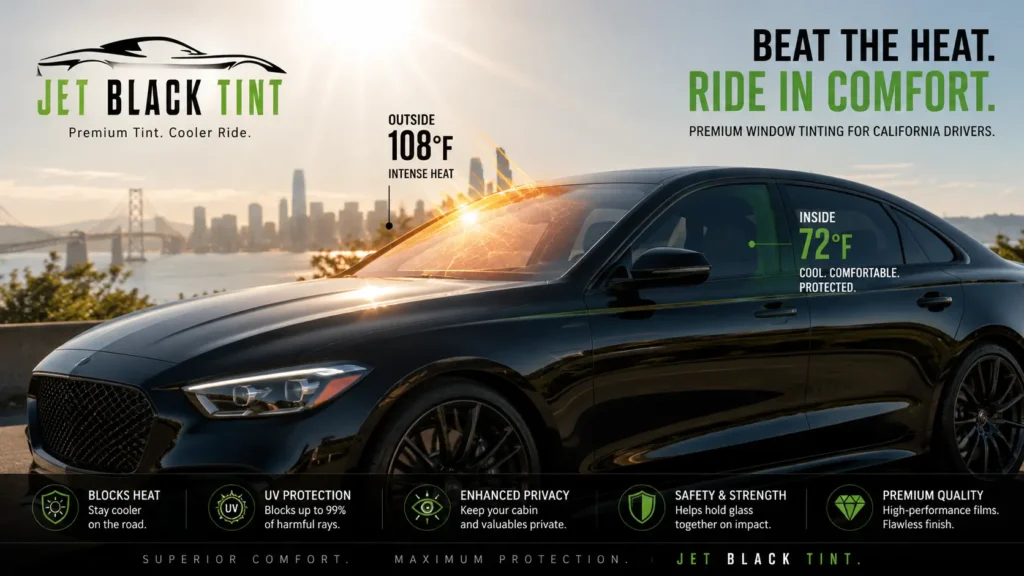
Window tint works by reducing the amount of solar energy that enters your vehicle through the windows. Sunlight carries different forms of energy, including visible light, ultraviolet rays, and infrared heat.
The part that makes your vehicle feel hot is largely infrared radiation. When sunlight passes through your glass, it heats your seats, dashboard, steering wheel, and interior surfaces. Those surfaces then hold and radiate heat, causing the cabin temperature to rise.
Quality window tint helps block or reflect a portion of that solar energy before it enters the car.
This can help reduce:
The better the tint technology, the more effective the heat reduction.
Not always.
This is one of the biggest misconceptions about window tint.
Many people assume that darker tint automatically blocks more heat. While darker tint can reduce visible light, it does not always mean it provides better heat rejection.
A cheap dark dyed tint may look very dark but still perform poorly against infrared heat. On the other hand, a lighter ceramic tint can block much more heat while still allowing better visibility.
That means film quality matters more than darkness alone.
When choosing tint, customers should look beyond shade percentage and ask about:
For California drivers, this is especially important because daily sun exposure can quickly reveal the difference between basic film and premium tint.
If heat reduction is your top priority, ceramic tint is usually the best choice.
Ceramic window tint uses advanced non-metallic technology designed to block infrared heat while maintaining clarity. It does not rely only on darkness to perform well.
Benefits of ceramic tint include:
For Bay Area drivers who spend time commuting, parking outside, or sitting in traffic, ceramic tint can make a noticeable difference in comfort.
If you are looking for a performance-focused tint option, Jet Black Tint offers premium packages here:
https://jetblacktint.com/199-window-tinting-special-offer/
This is a strong choice for drivers who care about long-term comfort, durability, and heat control.
The exact temperature difference depends on several factors, including the film type, vehicle color, glass size, interior material, and weather conditions.
In general, high-quality tint can help your vehicle feel noticeably cooler by reducing the heat entering through the windows.
The biggest difference is often felt on:
Even if tint does not make your car feel cold after sitting in direct sunlight, it can reduce the intensity of the heat and help the cabin cool down faster once the air conditioning is running.
This is especially useful in California, where a parked car can heat up quickly under direct sun.
When less heat enters the cabin, your air conditioning system does not have to work as hard to cool the vehicle.
This can make your car feel comfortable faster after you start driving.
For daily commuters, that matters.
Instead of blasting the AC at full power for an extended period, tint can help reduce the overall heat load inside the cabin. Over time, this can make driving more comfortable and less stressful.
This benefit is especially noticeable during:
For drivers throughout San Jose, Oakland, Fremont, and Walnut Creek, reducing heat can improve daily comfort significantly.
Heat does not only affect comfort. It can also damage your vehicle’s interior over time.
Constant heat and sunlight can cause:
Window tint helps reduce the amount of solar energy entering your car, which can slow down this damage.
This is especially valuable for luxury vehicles, Teslas, SUVs, trucks, and cars with leather interiors.
For California drivers planning to keep their vehicle for several years, tint can be a smart investment in long-term interior protection.
Yes, window tint can make the back seat more comfortable too.
Rear passengers often deal with direct sunlight coming through side windows and rear glass. This can be especially uncomfortable for children, pets, elderly passengers, and rideshare customers.
Tinted rear windows can help reduce sunlight exposure and cabin heat, making the ride more comfortable for everyone.
This is one reason many families, rideshare drivers, and business vehicle owners choose tint.
Windshield tint can help with heat and glare, but it must be done carefully and legally.
California has specific rules about windshield tint, and not all windshield tint options are allowed.
Before choosing any windshield film or tint strip, review California tint rules here:
https://jetblacktint.com/legal-tint
A professional installer can help you choose an option that improves comfort while staying within legal limits.
If your main goal is reducing heat, focus on film type first.
Dyed tint is usually the most affordable option. It darkens the windows and reduces some glare, but it does not provide the same heat rejection as ceramic tint.
Dyed tint may be enough if you mainly want appearance and privacy.
Carbon tint performs better than dyed tint and offers improved durability. It provides better heat rejection and a clean matte look.
Ceramic tint provides the strongest heat reduction and long-term value. It is the best option for drivers who want maximum comfort, UV protection, and durability.
For most California and Bay Area drivers, ceramic tint is the best choice for heat control.
Not every driver needs the highest-end film right away.
If you are looking for a budget-friendly tint option that improves appearance, reduces glare, and adds some comfort, Jet Black Tint offers:
https://jetblacktint.com/99-window-tinting/
This can be a good starting point for customers who want an affordable upgrade.
However, if heat reduction is your main priority, a higher-performance ceramic package is usually the better long-term choice.
If your current tint is old, bubbling, faded, or low-quality, it may not be doing much to reduce heat anymore.
Signs your tint may need replacement include:
If your tint is failing, it should usually be removed before new film is installed.
Jet Black Tint offers removal service here:
https://jetblacktint.com/free-full-tint-removal/
Starting with clean glass allows new tint to bond properly and perform better.
If you want professional tint but do not have time to visit a shop, mobile tinting can be a convenient option.
Jet Black Tint offers mobile tint service here:
https://jetblacktint.com/mobile-tint/
Mobile installation is useful for:
This allows you to get professional window tinting without disrupting your schedule.
Yes. Even though some parts of the Bay Area have cooler weather than other parts of California, sunlight and heat are still major factors.
Bay Area drivers deal with:
A car parked in San Jose or Walnut Creek can feel very different from one parked in San Francisco, but tint provides useful comfort benefits across the region.
This makes window tint a practical upgrade for Bay Area drivers.
For most drivers, yes.
Heat-reducing tint is worth it if you:
The value is even stronger if you choose ceramic tint because it provides long-term performance and durability.
Window tint does reduce heat in your car, but the results depend heavily on the film you choose.
Basic tint can help with shade and appearance, but premium ceramic tint provides much better heat rejection and long-term comfort.
For California and Bay Area drivers, heat reduction is one of the strongest reasons to invest in professional window tinting. It helps keep your cabin cooler, protects your interior, reduces glare, and makes everyday driving more comfortable.
If your goal is maximum cooling performance, ceramic tint is usually the best choice.
Yes. High-quality window tint can reduce the amount of solar heat entering your car, making the cabin more comfortable.
Ceramic tint is usually the best option for heat reduction because it blocks infrared heat more effectively than basic dyed film.
No. Film technology matters more than darkness. A lighter ceramic tint can block more heat than a darker low-quality tint.
It can help reduce heat buildup, but your car may still get warm in direct sunlight. Tint helps reduce intensity and allows the cabin to cool faster.
Yes. By reducing heat entering the cabin, tint can help your AC cool the vehicle more efficiently.
Yes. Ceramic tint is especially valuable in California because it offers stronger heat rejection, UV protection, and durability.
Yes. Old or damaged tint may lose performance over time and should be replaced if it is bubbling, peeling, or faded.
Yes.